The Moment of Joy
For a long time, my co-founder and I were struggling to answer one of the most important questions every startup faces: why are we building this company?
We could easily look at other startups and sense what they were missing. We could analyze their tone, their messaging, their product launches — and detect the lack of a deeper emotional drive behind their work. This is what psychologists call cognitive empathy: the ability to understand someone else's experience, without necessarily feeling it yourself.
But when it came to our own company, we weren't as clear. We always had the seed inside us, but we failed to put it into words.
The Breakthrough
The turning point came not in a strategy session or pitch deck rehearsal, but in a spontaneous moment during our beta testing.
My co-founder has always been obsessed with technology. He loves experimenting with new tools but never quite managed to master programming. When the "vibe coding" movement started—where software is created through natural language instead of traditional code—he was one of the early explorers.
During one of our sessions, he gave our AI agents a particularly challenging prompt inside JigJoy. He leaned back, excited and curious, waiting to see what the agents would build.
When the application was finally ready, he shouted:
"Wow! Come look at this. Look at what they created. This is amazing—the possibilities are endless! I don't know what drives you, but for me, it's exactly this moment."
His joy was raw, authentic, and contagious. Watching him, I suddenly understood: this joy is our why.
A Flashback to My Own Beginning
His reaction pulled me back years earlier, to my own first breakthrough as a software creator.
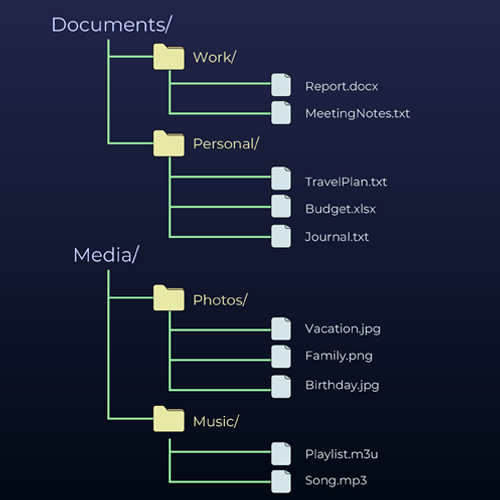
I was a student at the Faculty of Technical Sciences, working with a group of colleagues on an ambitious project: a file editor that could eventually handle text, video, and audio. We started with the simplest part—building a textual editor.
My personal challenge was to display files and folders, no matter how deep they were nested. It's a problem that programmers solve with recursion—a powerful concept, but a difficult one for a beginner.
I struggled for an hour, trying and failing repeatedly. And then, suddenly, it worked. The folders appeared, nested within each other, exactly as I had imagined.
I jumped up from my laptop, ran to my roommate and colleague, and shouted:
"Come here, hurry up, look at this! I made it! I finally made it!"
He looked at the screen, saw the result, and immediately shared the same spark of joy.
That was my first "creator's high"—the magical moment when an idea in your head transforms into something real on the screen.
The Universal Joy
And that's when it all clicked for me.
This is the essence. This is what connects both the technical and the non-technical world. It doesn't matter if you can write code or not—what matters is the joy of creation, the moment when something imagined becomes real.
That's what my co-founder felt. That's what I felt years ago. And that's what we want to enable for everyone.
Our mission is not simply to "democratize software development" or to "make coding accessible." Those are surface-level outcomes.
At its core, our mission is to give everyone the chance to experience that unforgettable moment: when the code runs, the idea comes alive, and you feel the spark of joy.
This is why we're building JigJoy!

With tools and technology we already have, we can build much more valuable systems than most projects today. We can write software that is a pleasure to use and a pleasure to work on; software that doesn't box us in as it grows, but creates new opportunities and continues to add value for its owners.