ScamMesh
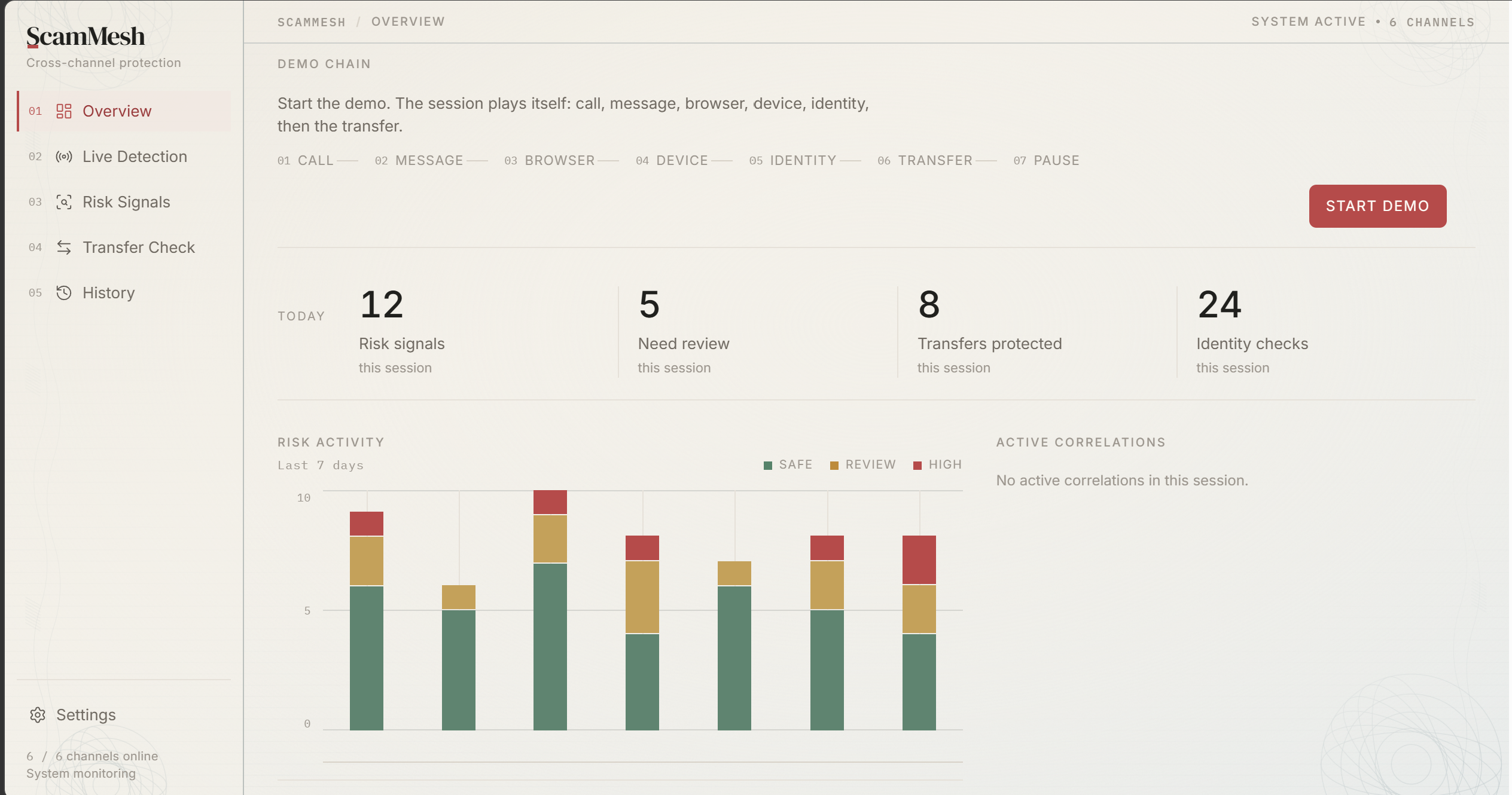
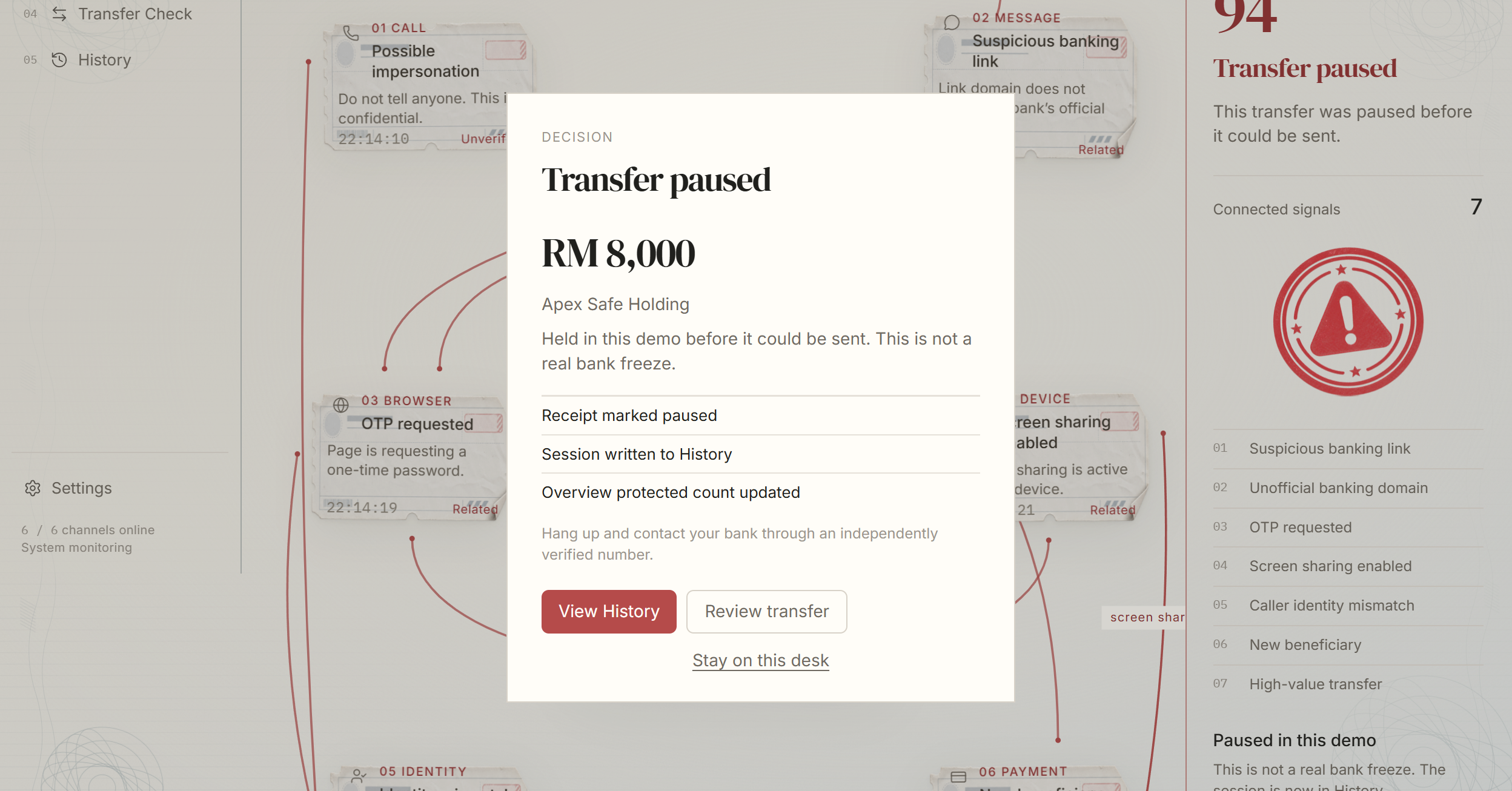
ScamMesh spots a bank scam that arrives as a call, SMS, and payment at once. Six agents each see only their own channel (Call, Message, Browser, Device, Identity, Payment) and raise each other’s alert level as they share risk events. Together they can recommend pausing the transfer.
What it does
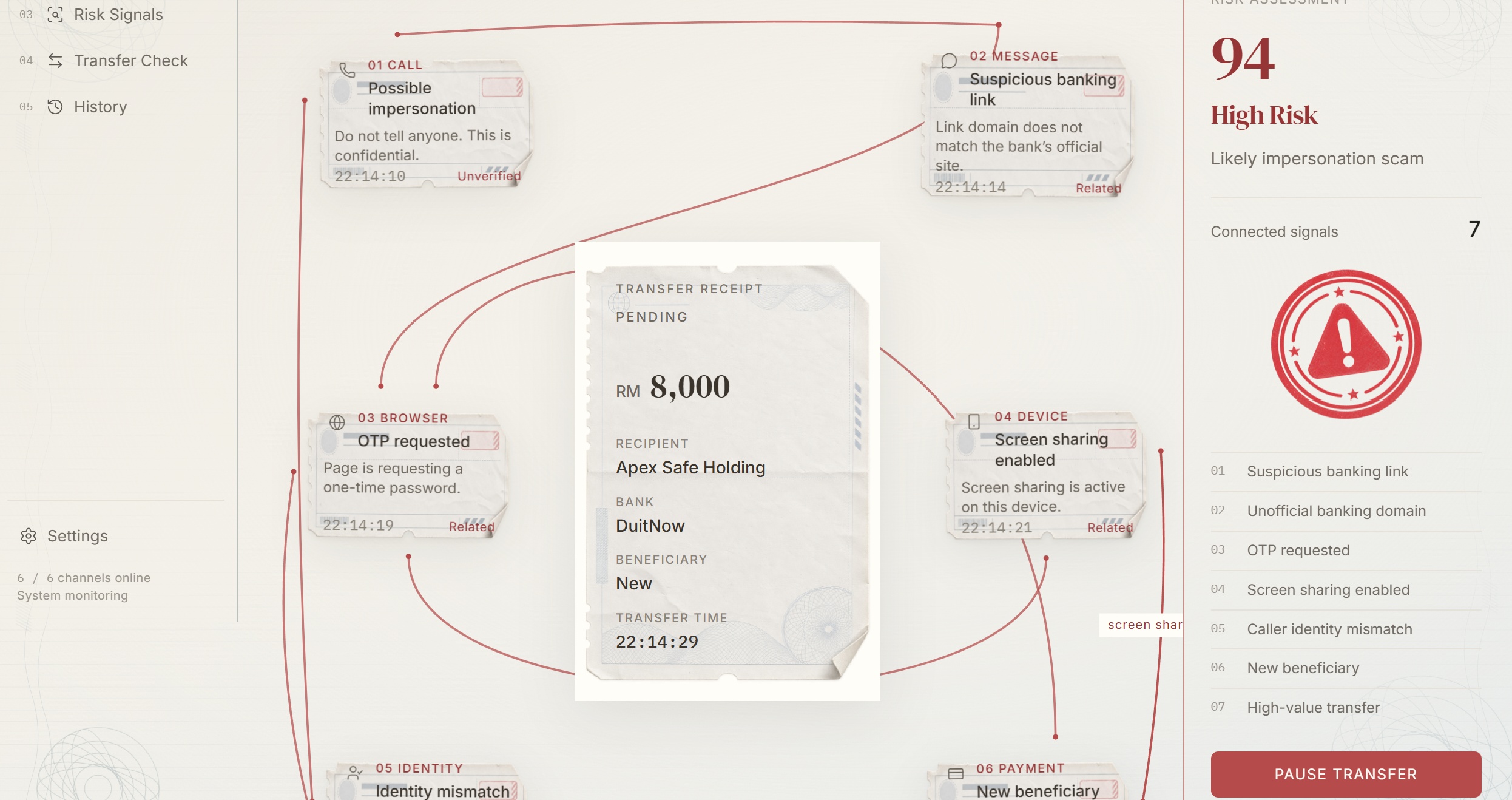
ScamMesh is a cross-channel scam detection prototype. Six agents monitor calls, messages, browser activity, device activity, identity checks, and payment drafts separately, then share structured risk events through Mozaik. The demo shows how weak signals from different channels can combine into a high-risk impersonation scam before a transfer is sent, while never executing or blocking a real financial transaction.
How the agents run concurrently
All six agents join the same Mozaik session and run concurrently rather than as a sequential pipeline. Each agent receives only its own channel input — Call, Message, Browser, Device, Identity, or Payment — and publishes structured semantic risk events into shared runtime state. Those events can change how other agents behave while they are still running: for example, a coercion signal from Call raises Message scrutiny, a suspicious link from Message prioritizes Browser inspection, and an identity mismatch escalates Payment monitoring. The demo feeds are deterministic for repeatability, but the Mozaik runtime, concurrent agents, shared events, adaptations, risk engine, SSE updates, and UI state are all running through the real session.