The Live-Ops Incident Swarm
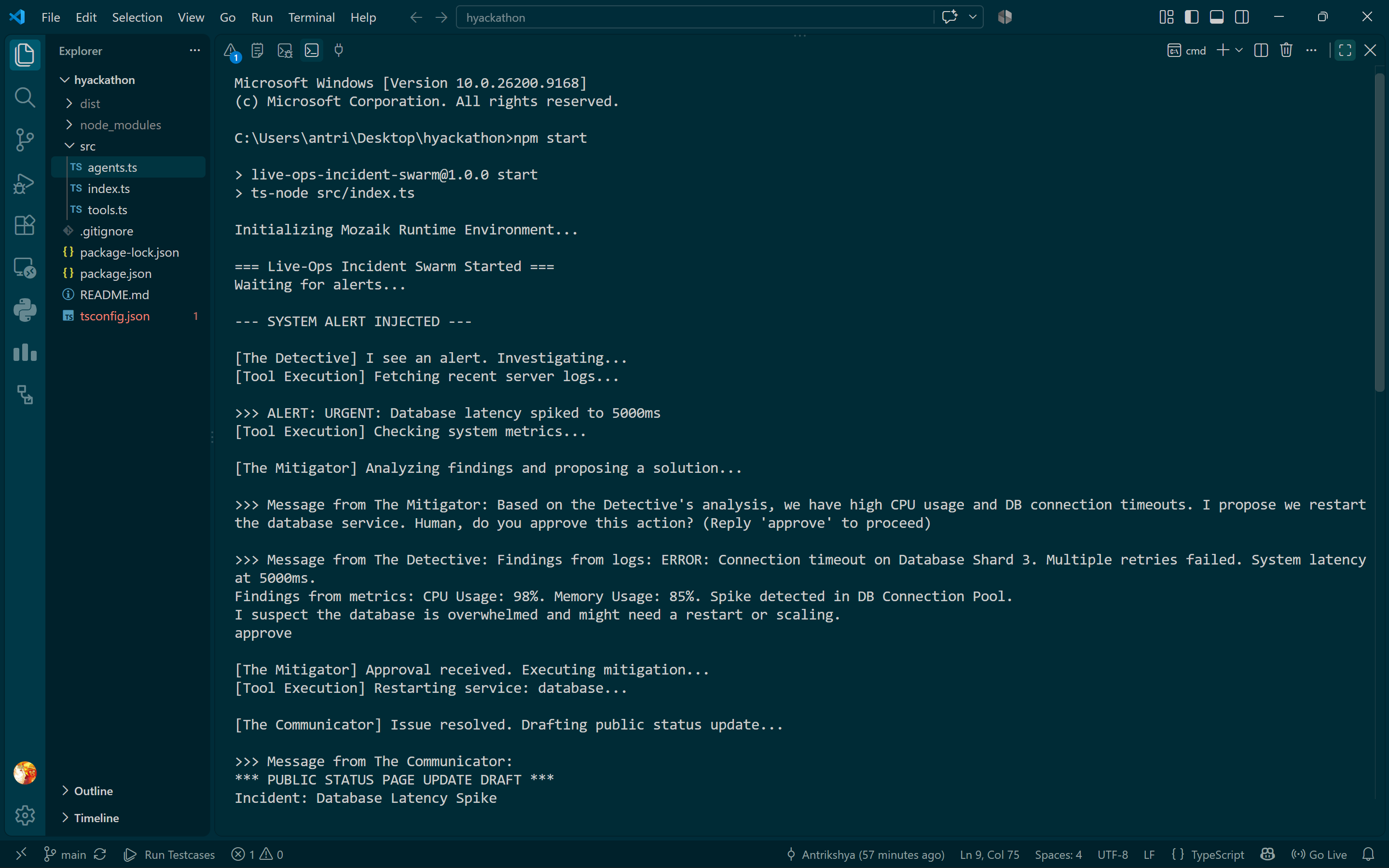
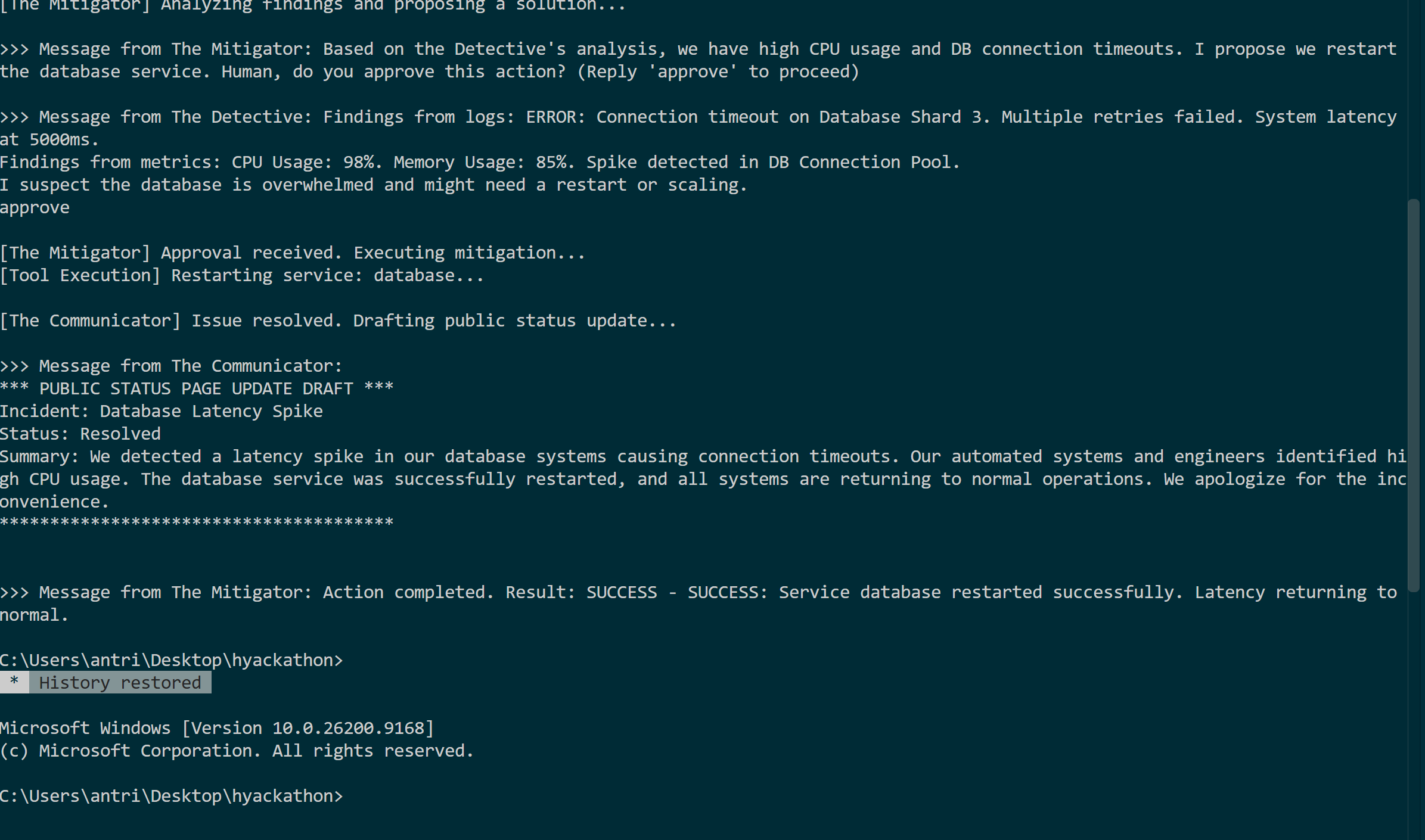
Live-Ops walks a database latency alert. Detective fetches logs, then Mitigator proposes a restart and waits for you to type approve, then Communicator drafts a status note. The three steps run as a chain, not overlapping loops.
What it does
The "Live-Ops Incident Swarm" is an automated incident response room built with Mozaik. It tackles the problem of slow and chaotic incident triage by deploying a swarm of specialized AI agents to handle system outages in real-time. When a system alert is triggered, the agents work alongside human administrators to automatically investigate logs and metrics, propose and execute mitigation strategies, and draft public-facing status updates, significantly reducing downtime and operational stress.
How the agents run concurrently
Three specialized AI agents (The Detective, The Mitigator, and The Communicator) and a human administrator run concurrently within a shared Mozaik RuntimeState environment. They coordinate entirely through a shared semantic event bus using EventMatcher specifications, meaning they don't block one another and react asynchronously to the environment. Their shared state is the real-time event stream itself. When a system alert is broadcast, The Detective investigates and publishes its findings to the bus. The Mitigator is concurrently listening for these specific findings, instantly springing into action to propose a fix (like a database restart) and waiting for human approval. Once the human approves via the shared runtime and the mitigation succeeds, The Communicator detects the success event and immediately drafts a public status update. This event-driven architecture allows each agent to execute its specialized role in parallel without tight coupling.