AI SWARM STUDIO
by ALONE CODER
What it does
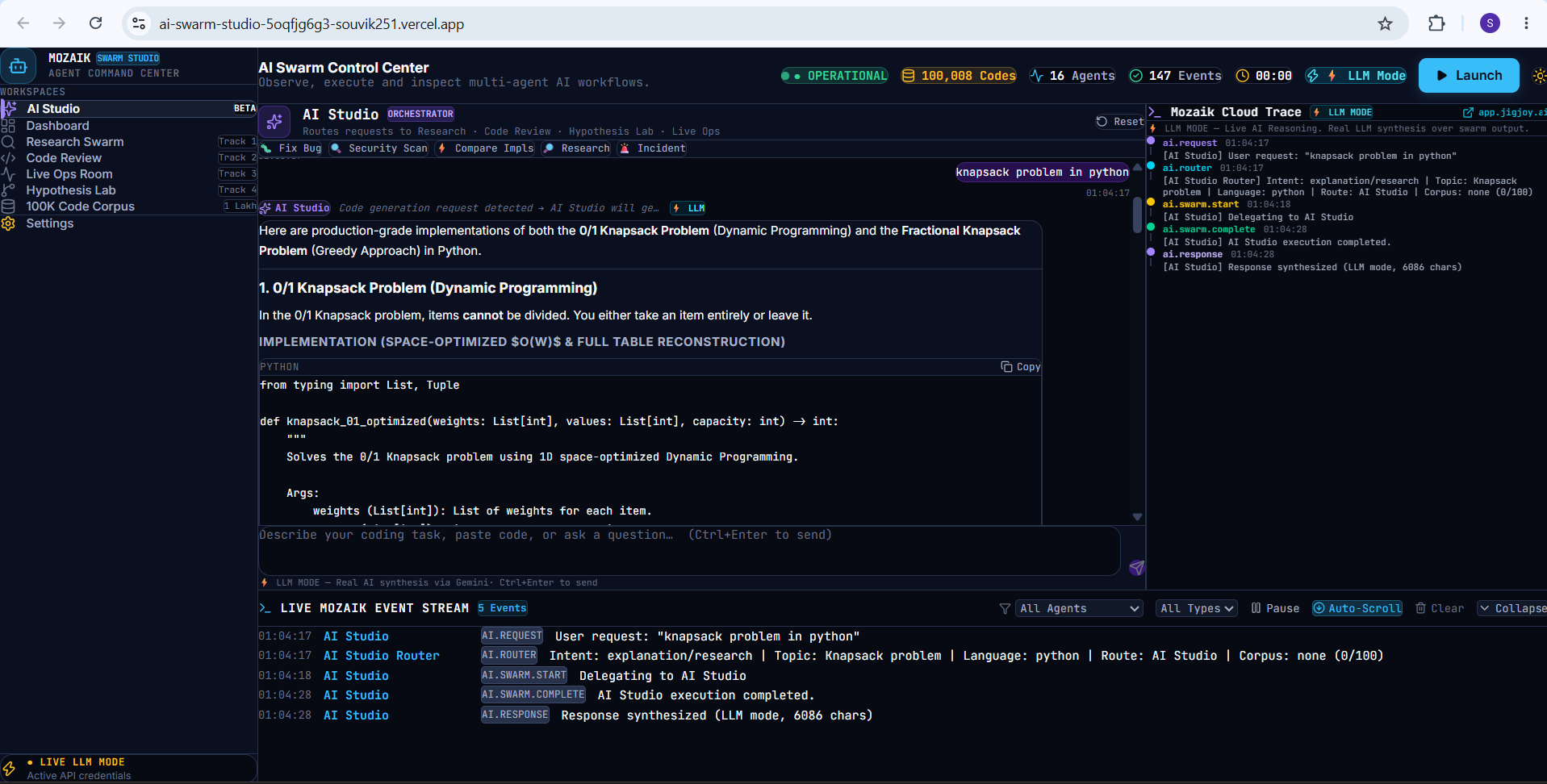
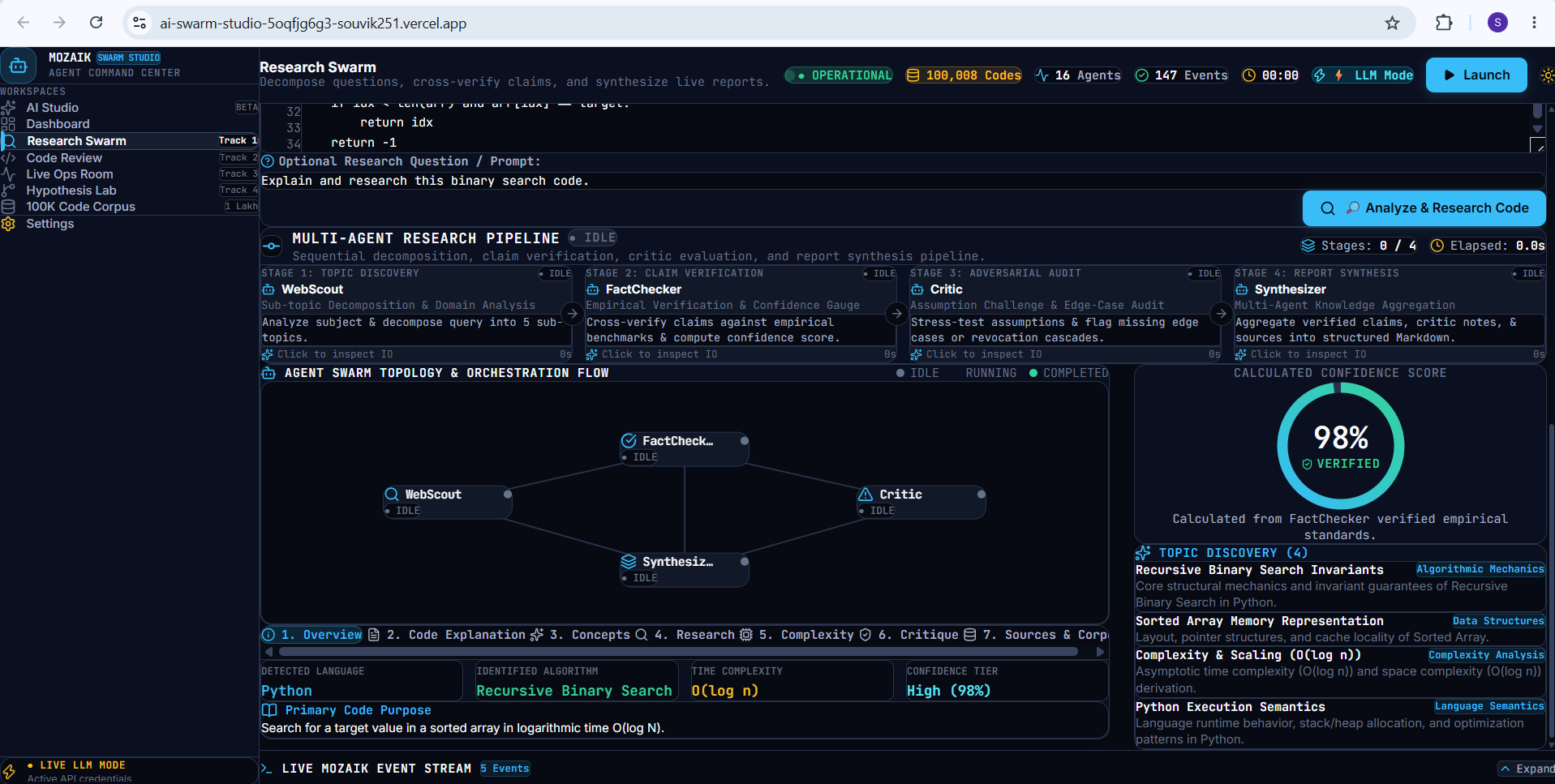
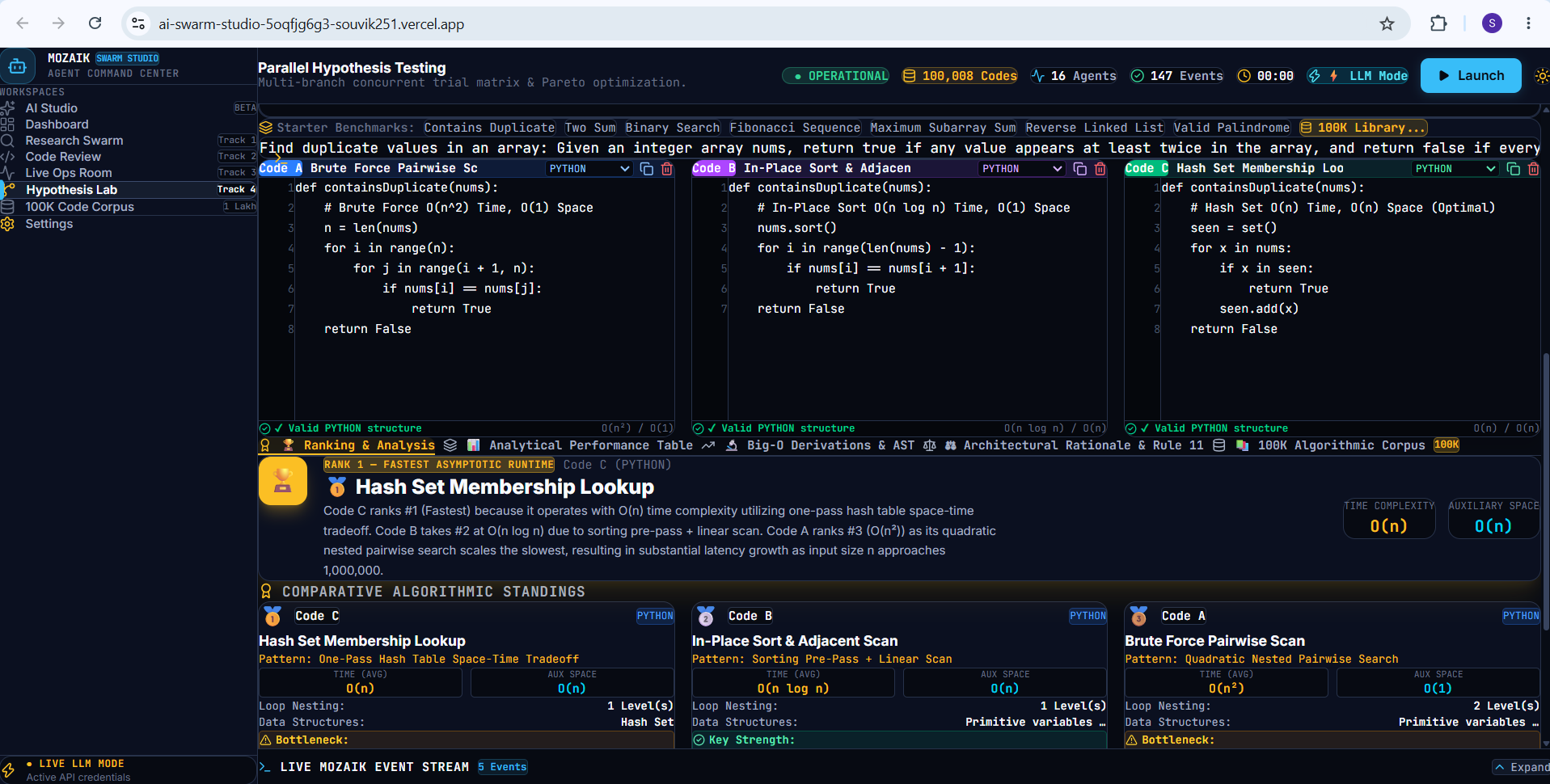
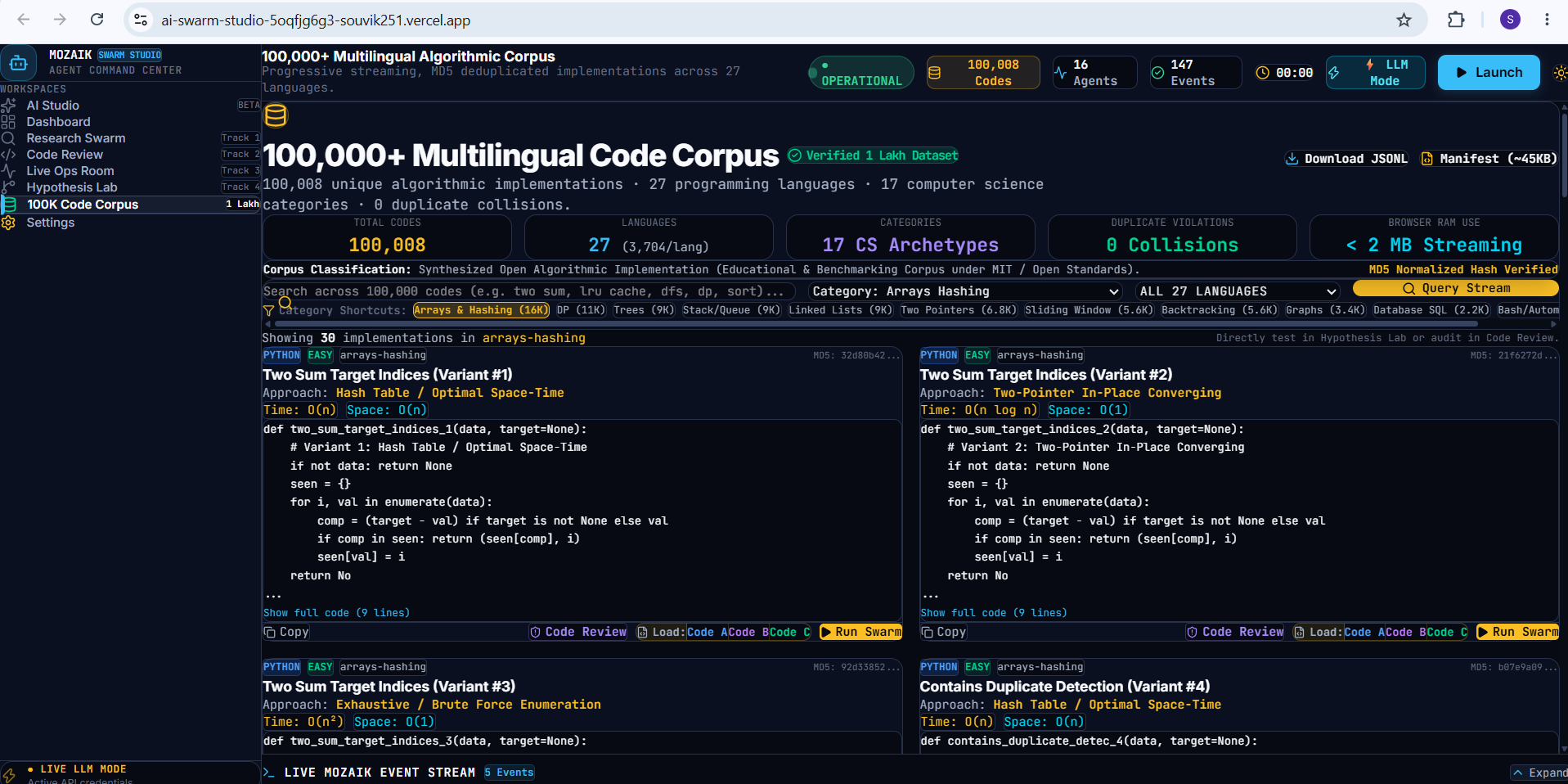
My web app is a developer-focused AI workspace built around multiple cooperating agents. Mozaik AI Swarm Studio helps developers understand code, review code, compare different implementations, and diagnose running-system problems using specialized AI agent swarms. My app 5 main parts are:- ✨ AI Studio — Central Orchestrator The user describes what they need, and AI Studio decides which specialist should handle it. 🔵 Research Swarm — Understand & Research Paste code or ask about a technical topic. It analyzes the code, identifies concepts/algorithms, researches them, fact-checks the information, critiques it, and explains the result. 🟣 Code Review — Find & Improve Problems Give it code and it looks for bugs, security issues, performance problems, refactoring opportunities, and tests. 🟡 Hypothesis Lab — Compare Code Give it 2–3 implementations of the same problem. It analyzes their time/space complexity and performance characteristics, then ranks them: 🥇 Rank 1 → 🥈 Rank 2 → 🥉 Rank 3 🔴 Live Ops — Investigate Running Systems Give it logs, metrics, errors, or an incident description. The agents analyze the evidence, identify likely root causes, and suggest remediation. The key idea is- My web app is not just “another chatbot.” Its workflow is:- Developer ↓ AI Studio ↓ Choose the right specialist swarm ↓ Multiple agents cooperate ↓ Analyze / Research / Compare / Diagnose ↓ Structured result ↓ Explanation + recommendation And this web app also have the 100,008-code multilingual corpus as a supporting coding knowledge/example layer, plus Mozaik Cloud observability for seeing the agent/event execution. So the simplest description of your product is: An AI-powered developer workspace where specialized agents work together to understand, review, compare, and troubleshoot software.
How the agents run concurrently
Our agents run concurrently where their work is independent. For example, in Hypothesis Lab, the three code-analysis branches evaluate Code A, Code B, and Code C in parallel, sharing the same experiment context but maintaining independent branch results. Once those branches complete, downstream agents such as the Metric Evaluator and Synthesis Engine consume the combined shared state. Research Swarm similarly parallelizes independent research tasks before verification and synthesis. Live Ops can parallelize telemetry analysis across CPU, database, errors, and other signals before root-cause reasoning. Mozaik Semantic Events capture these agent starts, completions, and state transitions so the execution can be observed.