Dinner Rush
What it does
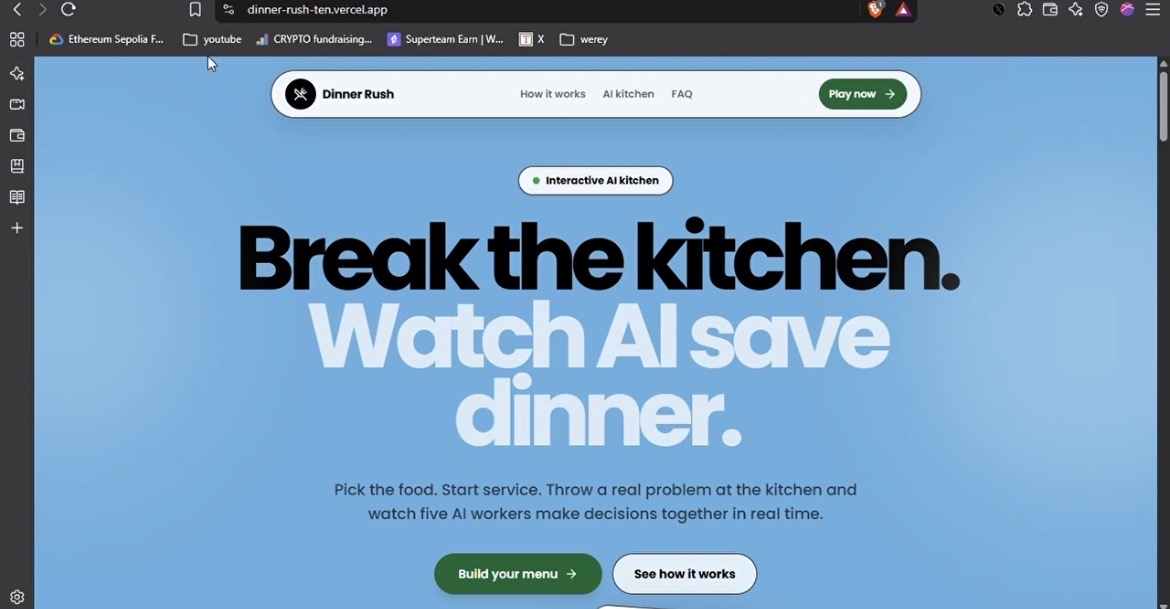
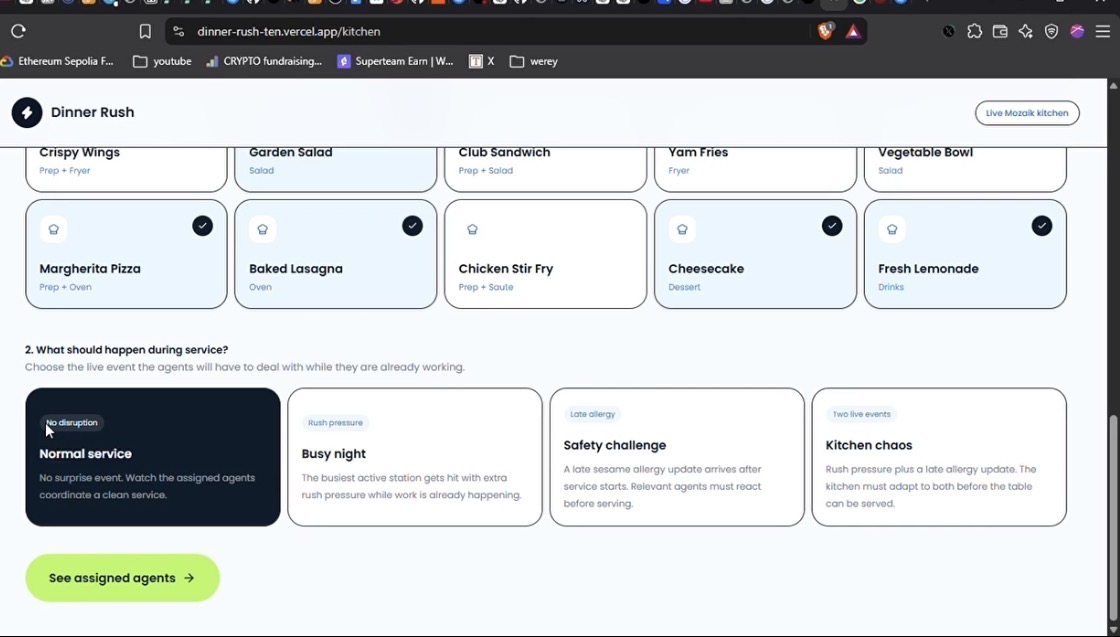
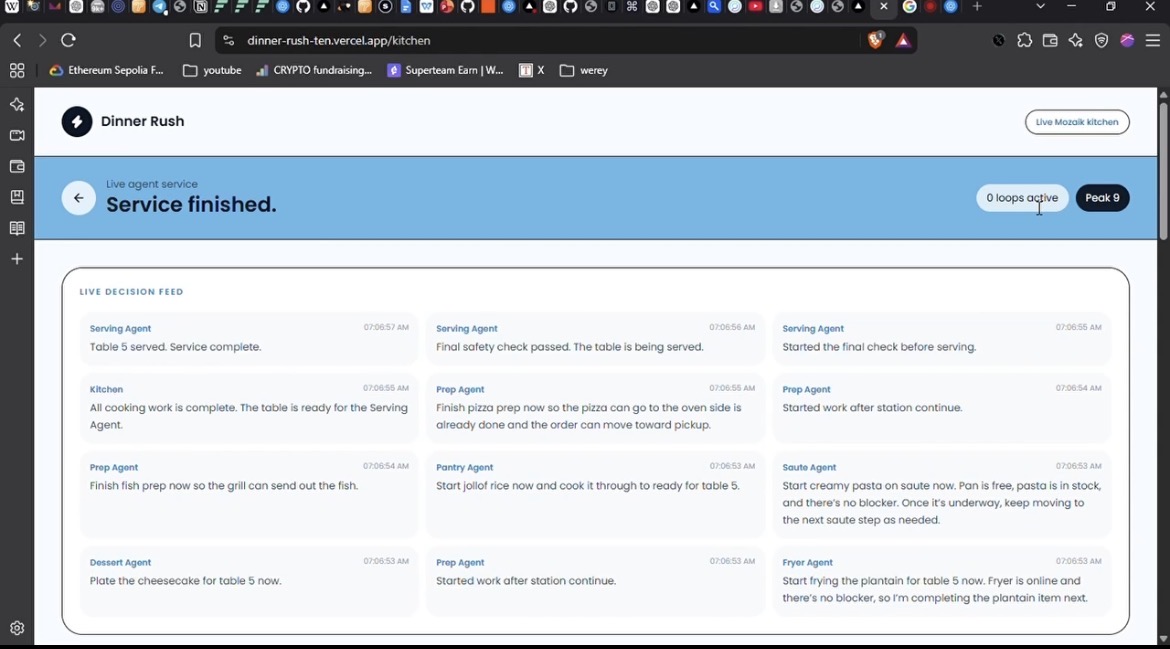
Restaurants are chaotic during busy service. Multiple stations need to prepare different parts of an order at the same time, while reacting to problems like workload spikes and last-minute allergy updates. Dinner Rush turns that workflow into a concurrent AI system. Specialized agents handle different restaurant stations, share live kitchen state, work simultaneously, react to disruptions, and coordinate until the complete order reaches a final Serving Agent for a safety check and service.
How the agents run concurrently
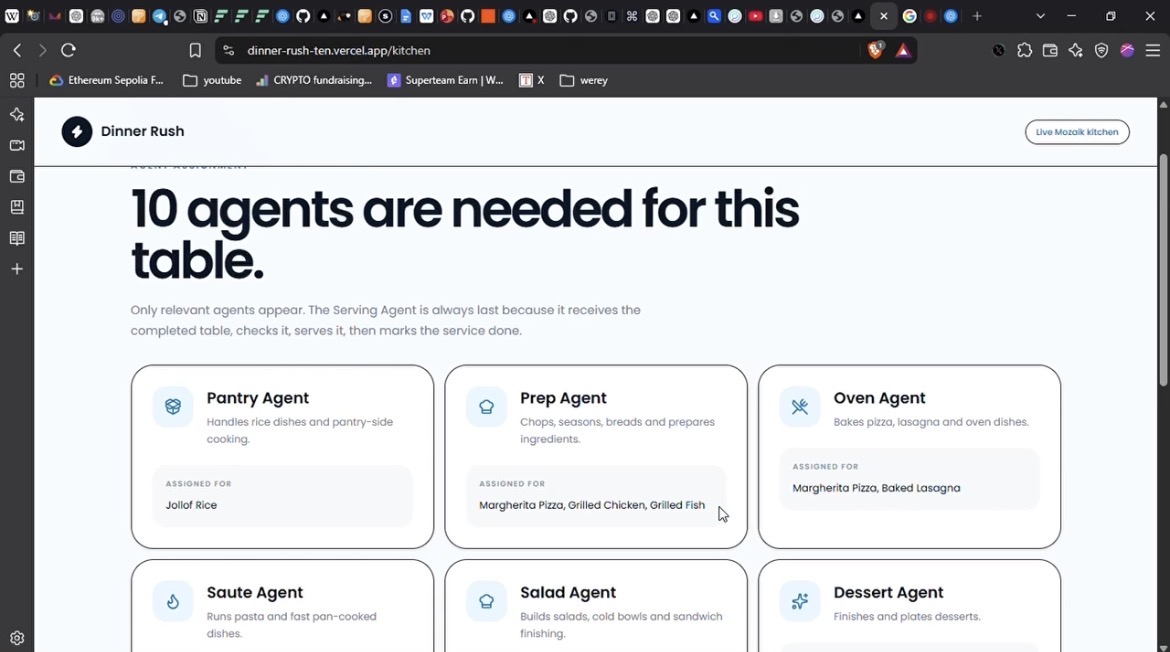
Dinner Rush runs multiple specialized kitchen agents as independent Mozaik participants, not as steps in a sequential pipeline. When an order starts, all relevant agents receive the event and can begin their own agent loops at the same time. For example, the Grill Agent can cook chicken while the Fryer Agent handles fries, the Pantry Agent handles rice, the Oven Agent handles pizza, and the Drinks Agent prepares drinks simultaneously. All agents read and update the same live KitchenRuntimeState, which contains the order, station progress, equipment status, inventory, safety information, decisions, and runtime activity. They coordinate through Mozaik semantic events. When something changes, such as a workload spike or late allergy warning, the event is published to the relevant agents while the other agents continue working. Agents can therefore react and replan without waiting for the entire kitchen to stop. Dinner Rush also records each agent’s Mozaik loop ID and start/end time. The UI visualizes overlapping loops in a concurrency timeline, providing runtime evidence that multiple agents actually executed at the same time. Finally, once all required kitchen agents finish, the shared state triggers the Serving Agent, which performs the final safety check and serves the completed order.